
Finding Altoona Residents by Record Type
Begin with the fact you can state precisely. A complete street address works best in Blair County’s parcel route. A name plus a filing date can fit the statewide court search. An old surname is often better served by a Polk volume, census microfilm, or a newspaper index at the Altoona Area Public Library. Each source answers a narrow question. The property roll reports assessment data for a taxable parcel, the Recorder preserves recorded transactions, and a directory prints a moment in time. None of them supplies a complete, current household list.
Use an independent match before treating a name as the same person. A parcel number and legal description can connect an owner field to a deed. A historic address and occupation can support a directory entry when paired with a nearby census. A public docket must be narrowed by Blair County, date, case type, and participant role. That measured approach makes an Altoona residents directory useful for family history, estate work, civic research, and checking a property trail without turning a search result into a claim about where someone lives now.
- Enter the exact address in the Blair parcel/GIS route and save the situs spelling, parcel or map number, owner line, and deed reference.
- Use that deed reference, a book and page, or party names with the Recorder’s Landex route or the counter in Hollidaysburg.
- For a public court question, search UJS with Blair County and useful date or role limits rather than a bare statewide name.
- For an earlier household, compare a verified city-directory edition with released census schedules and the library’s obituary or birth indexes.
- Send a focused written request to the right custodian when a city permit, administrative record, or historical item is not online.
Altoona Resident Records Desks
Altoona sits in Blair County, but the county counters that hold the key land, assessment, and court records are in Hollidaysburg. The Register of Wills and Recorder keeps recorded land and estate material. Assessment and GIS supply the parcel identifiers that help connect an Altoona address to that material. Election staff handle the regulated voter-list route, while the state status tool is for an individual’s own registration. For a full address chain, use the Altoona street directory route after identifying the parcel.
Blair Register of Wills & Recorder
423 Allegheny Street, Suite 145
Hollidaysburg, PA 16648
814-693-3095
Blair Assessment & GIS
423 Allegheny Street, Suite 041
Hollidaysburg, PA 16648
814-693-3110
Blair Election & Voter Registration
279 Loop Road
Hollidaysburg, PA 16648
814-693-3150
Altoona Parcel Fields That Matter
Blair’s CAMA and parcel data provide a practical starting record for an Altoona address. The county distinguishes the situs address, where the parcel is located, from a tax mailing city, state, and ZIP. It also lists a parcel or map number, old parcel number, control number, land description, assessment details, and a deed book, page, or instrument reference when available. Those fields help carry a property question to the Recorder, but they do not turn an owner or mailing field into proof of current occupancy.
| Parcel field | Use in an Altoona search | Important limit |
|---|---|---|
| Situs address | Locates the taxable parcel | It is not a list of everyone at the address. |
| Parcel/map number | Links map, assessment, and historic research | Older records may use an old map number. |
| Owner and care-of lines | Shows the assessment entry | Mailing information can differ from the property location. |
| Deed reference | Hands off to Landex or the Recorder counter | CAMA does not supply the deed image. |
- Parcel
- A taxable piece of land identified by the county’s map or parcel number.
- Situs address
- The physical street location recorded for a parcel, distinct from a mailing destination.
- Index
- A finding tool that points to a record; it is not automatically the record image or a certified copy.
- Criss-cross directory
- A directory section arranged by address, if the specific historical volume includes one.
See the Blair County Register of Wills and Recorder page for the office’s records and remote-access route.
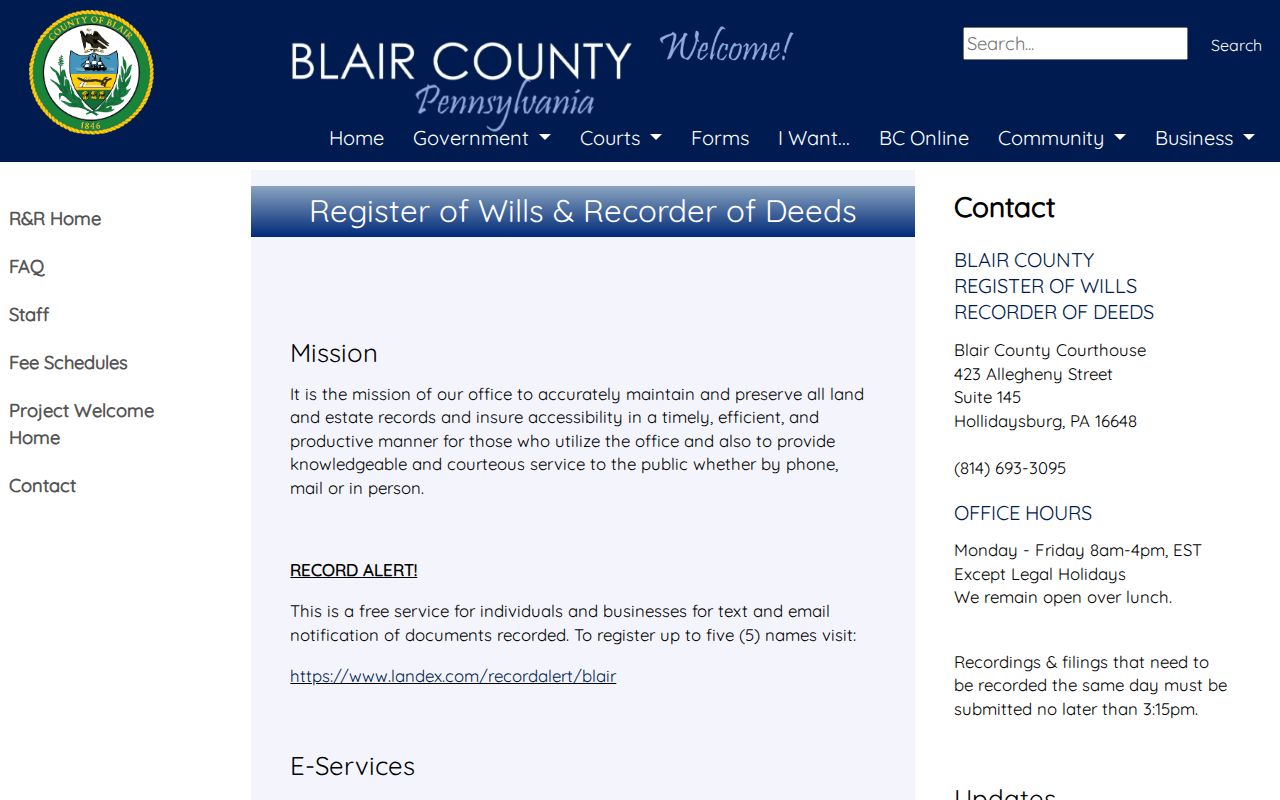
The Recorder’s page is the next step after a parcel field supplies a deed reference or a verified party name.
Blair Deed Names and Remote Access
Recorded instruments offer a different form of Altoona resident evidence. Blair County directs remote researchers to Landex, which requires registration and login. Landex describes remote time or page billing and browser document purchases, while the county also offers the Recorder counter, telephone, mail, and in-person access. County reporting says online access has existed since 2005, but the present remote index’s earliest searchable year is not published. Use the known document reference, legal description, or party names, then ask the office about gaps rather than inventing a cutoff.
The Recorder also links to free Blair County Record Alert. A person may enroll up to five names for text or email notice of a matching recorded document. An alert is useful for noticing a filing, not for proving title, ownership, identity, or residence. Confirm unexpected alerts through the Recorder’s published phone number or Suite 145 counter.
Altoona Voter Records Have Limits
Pennsylvania’s Find Voter Registration Status route lets an individual check their own registration. It is not an open street-by-street directory. Blair County also has public-information and street-list procedures under 25 Pa.C.S. §§ 1403–1404, but the request form requires identification, a signed permitted-use statement, and restrictions on internet publication. The state form describes a Street List as election material, not a general tool for identifying households.
See the official voter-status route before relying on it for a personal registration question.
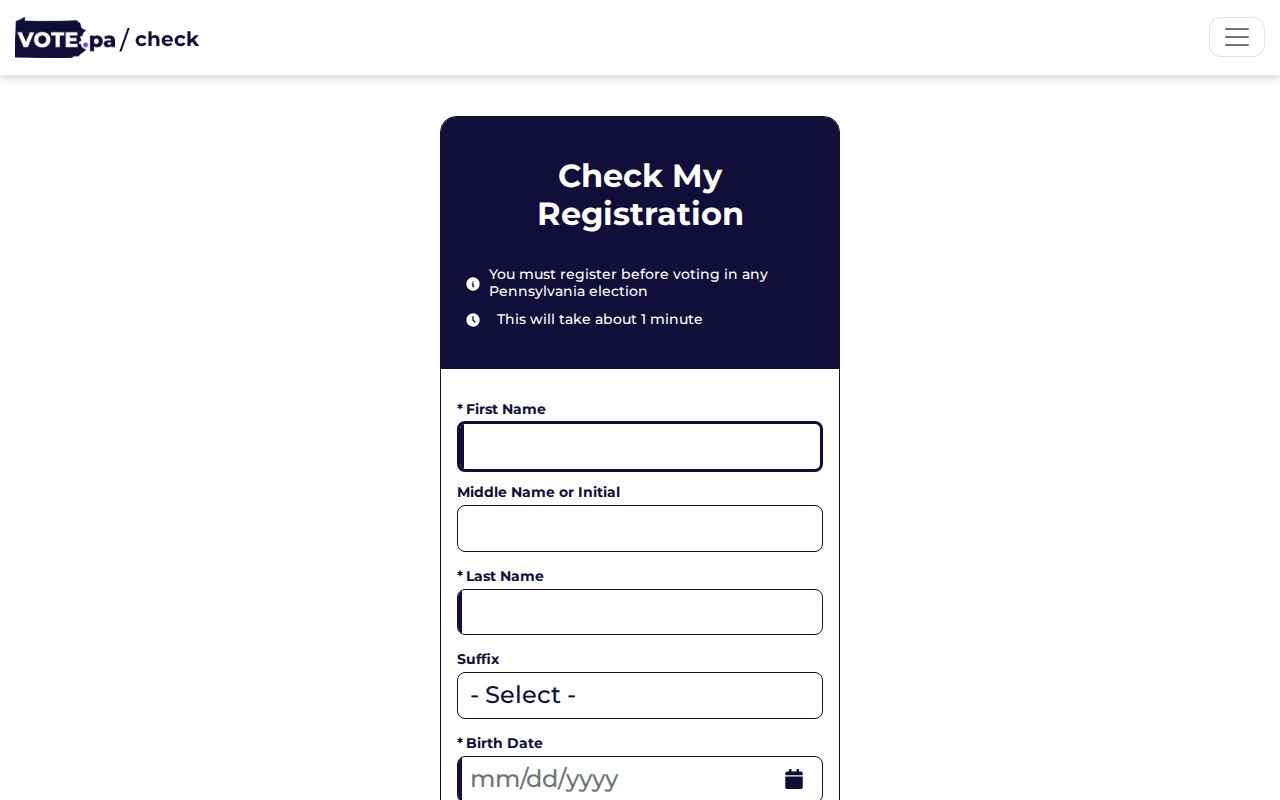
A registration result confirms only the limited status information the official service makes available for that purpose.
Current Altoona Resident Directories
Current Altoona resident information is spread across records with distinct purposes. The parcel layer can name an assessed owner or care-of field. The voter tool has a self-service function, and voter lists have a separate legal request route. UJS publishes public docket information, while PALS verifies a professional credential. These records work best as limited confirmation sources. They do not create one complete directory of residents, and they should not be treated as a substitute for the office that owns a record.
| Source | Who It Lists | Keeper | Access |
|---|---|---|---|
| Parcel/CAMA data | Assessed owner or care-of for a parcel | Blair Assessment/GIS | Public viewer, data route, or terminal |
| Recorded instrument | Grantor and grantee in a transaction | Blair Recorder | Landex login/payment or counter |
| UJS docket | Public party, court, event, and status data | Pennsylvania judiciary | Free search with excluded case material |
| Voter status/list route | Self-status or statutory list data | State and Blair election offices | Purpose and access limits apply |
| License or entity record | Credential or filing information | State boards or Department of State | Not proof of a home address |
Use property records for a specific parcel, not a general name sweep. Use UJS for a public docket question, not a final identity conclusion. A credential or entity record checks that narrow affiliation. The Altoona resident lookup page sets out a one-person verification chain with the limits of each source.
Altoona Court Names Need Context
The public UJS Case Search is a statewide docket service for Blair County Court of Common Pleas and Magisterial District matters. Search modes can use a docket or citation number, participant name, filing dates, a Blair county filter, case category, and other advanced fields. A thoughtful name search uses the county and date range to reduce same-name results. A docket sheet points to a court file; it is not a certified record and it does not establish identity by a name match alone.
See the UJS Case Search interface before choosing a form field or interpreting a result.
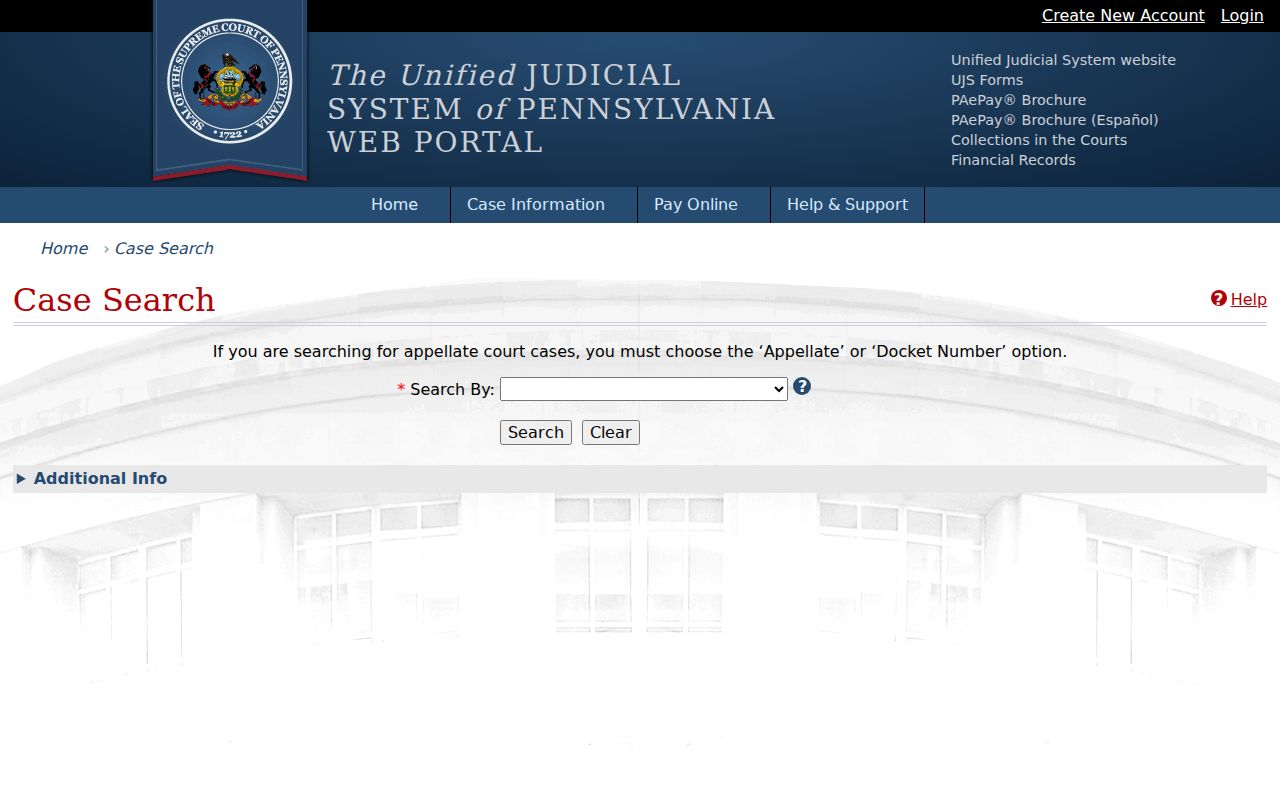
UJS excludes juvenile, expunged, limited-access, and some Common Pleas civil information, so an empty result is not proof that no record exists.
Vital Records Follow Altoona Dates
For births and deaths from 1906 forward, Pennsylvania’s Division of Vital Records is the custodian, not Altoona City Hall. It offers an authorized online order route, mail application, and Vital Records Public Office. Staff conduct searches of the records held by the Division. Birth certificates become public after 105 years and death certificates after 50 years; the State Archives provides historical index and non-certified-copy paths for qualifying records. Marriage licensing belongs with the Blair Clerk of Orphans’ Court, whose historical and current paths differ from state birth and death records.
See the Pennsylvania Vital Records hub for the current order channels and eligibility information.
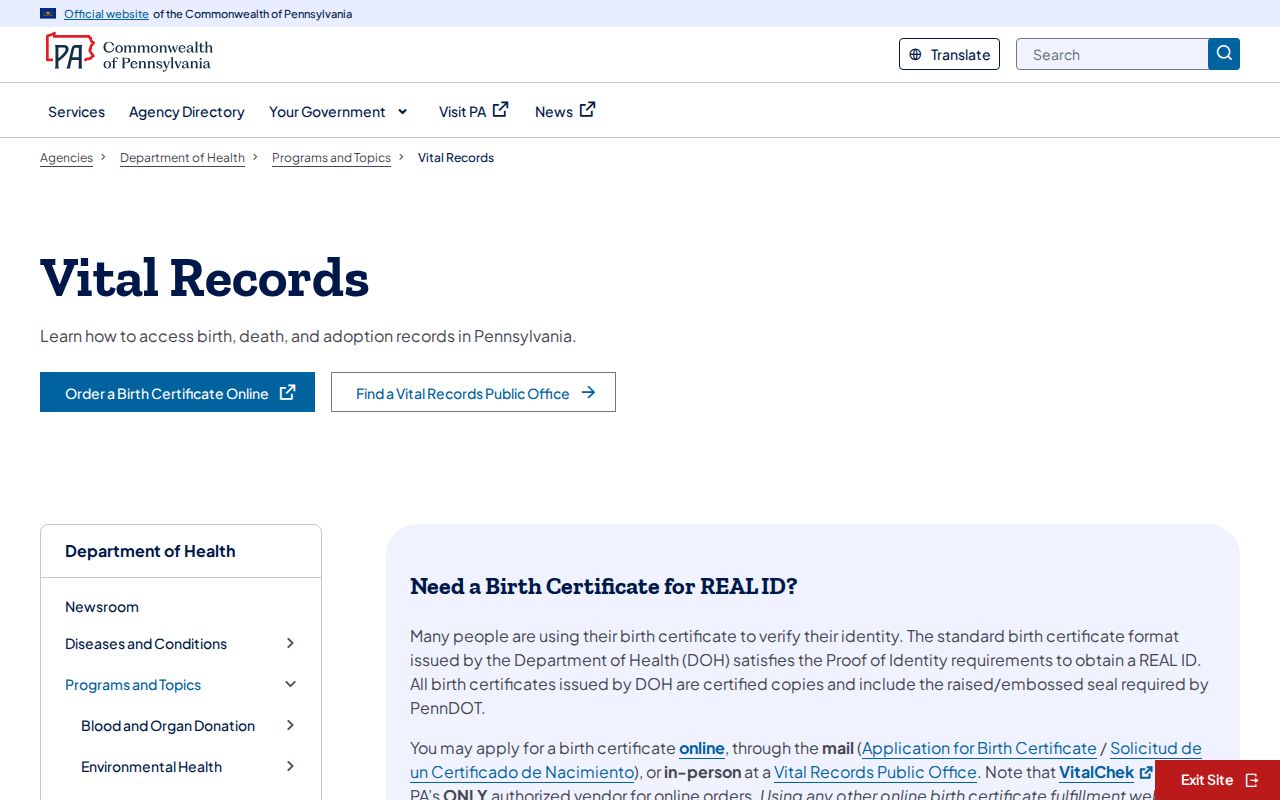
A historical index can supply a certificate lead, while certified copies remain a Division of Vital Records function.
Altoona Requests Work Best When Narrow
City administrative records and address-specific permit material use a written Right-to-Know process. The Altoona City Clerk is the Open Records Officer at City Hall. A useful request identifies the exact address, approximate date range, and record sought, such as a named permit or code file. City Codes & Inspections has permit and application systems, but research did not identify a verified public permit or code-case search. The request route is the honest fallback when a targeted record is not online.
See the City of Altoona Right-to-Know page for the city’s submission route and its record-request guidance.
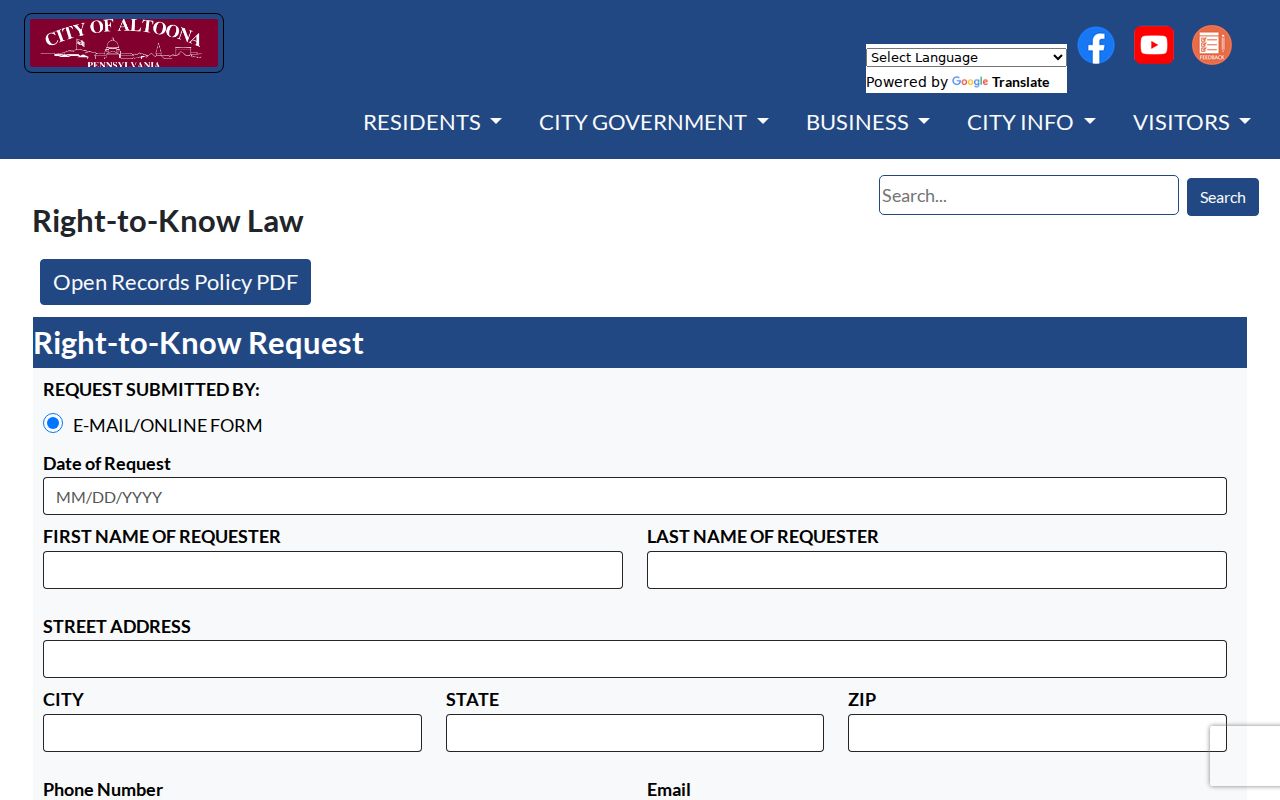
The city states that criminal-investigative records and police recording requests have different access rules, so a request should go to the correct process.
The Pennsylvania Office of Open Records publishes the statewide form, fee guidance, and appeal information for the Right-to-Know Law.
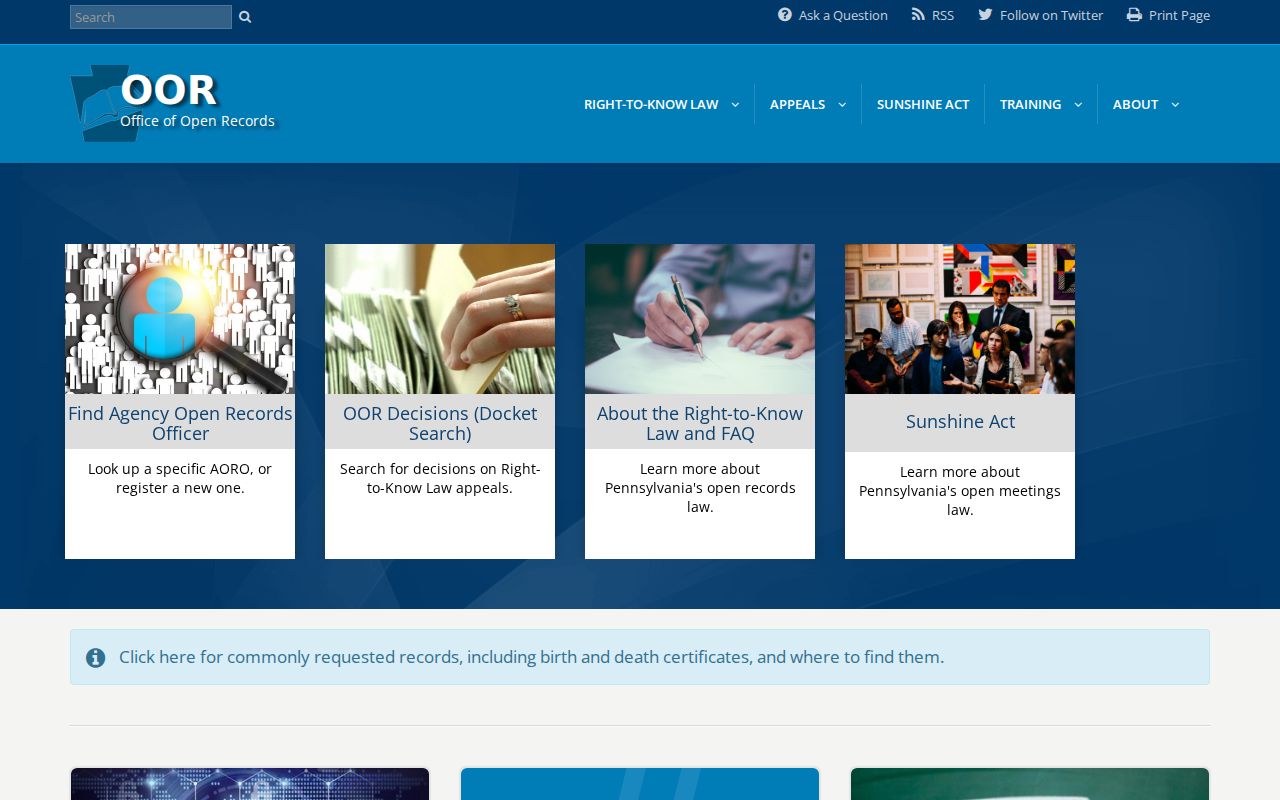
Pennsylvania agencies generally respond within five business days under the Right-to-Know Law, with a statutory interim-response process when extra time is justified.
Altoona Records Require Privacy Care
Public does not mean unrestricted. Pennsylvania’s Address Confidentiality Program can protect a participant’s actual address, and voter rules also allow confidential address treatment for specified safety situations. Court policy protects sensitive fields and can restrict or redact filings. Voter lists omit the electronic signature and SURE registration number, and state law limits the purpose and online publication of obtained lists. Correct an error through the official custodian rather than assuming that a commercial data source controls an official record.
Lawful personal use. Altoona record research can support family history, estate work, civic questions, and personal safety awareness, but it must never be used to stalk, harass, intimidate, or harm a person.
Altoona Historical Resident Directories
Altoona’s printed directory trail begins with the 1870–71 Lant directory and continues through identified Greevy, Renner, Webb, Clark, and Polk editions. The verified Polk run begins in 1896 and has selected cited years through 1939, not a promise of a volume for every year. Penn State digitizes the 1912–13 Polk Altoona and Hollidaysburg directory. An entry may print a name, occupation, address, compact residence notation, and sometimes a widow relationship. The volume also includes historic place labels such as Juniata and East End, so its geography needs a period-specific reading.
The full set of publisher runs, entry conventions, and household-tracing steps belongs on the Altoona city directory page. For an address-first inquiry, ask the library’s Pennsylvania Room whether the particular year has an address or reverse section. Research did not verify a continuous criss-cross run, so a careful search checks the actual volume before relying on one.
Altoona Library Indexes Fill Gaps
The Altoona Area Public Library supplies more than a shelf of old books. Its Digital Library links an Obituary Index, Birth Index, digitized resources, the Altoona Mirror, Newspaper Archive, Pennsylvania Newspaper Archive, oral histories, historic photographs, school-history material, the 1858–1872 Altoona Tribune marriage and death indexes, and Sanborn map links. Census microfilm for Blair and Huntingdon counties is another local route. These are research leads and historical context, not proof of a present address.
The library is at 1600 5th Avenue in Altoona and its posted schedule includes evening hours on Monday, Tuesday, and Thursday. A research visit can begin with the exact directory year, newspaper citation, street spelling, or surname variation already found in another source. The Pennsylvania Room and local-history holdings offer a counterweight to a missing remote result. For a difficult record, retain the title, date, page, and repository reference. That makes it possible to distinguish a library index entry, a scanned historical page, and an official certificate or recorded instrument later in the search.
See the Altoona Area Public Library Digital Library for its current index and collection links.
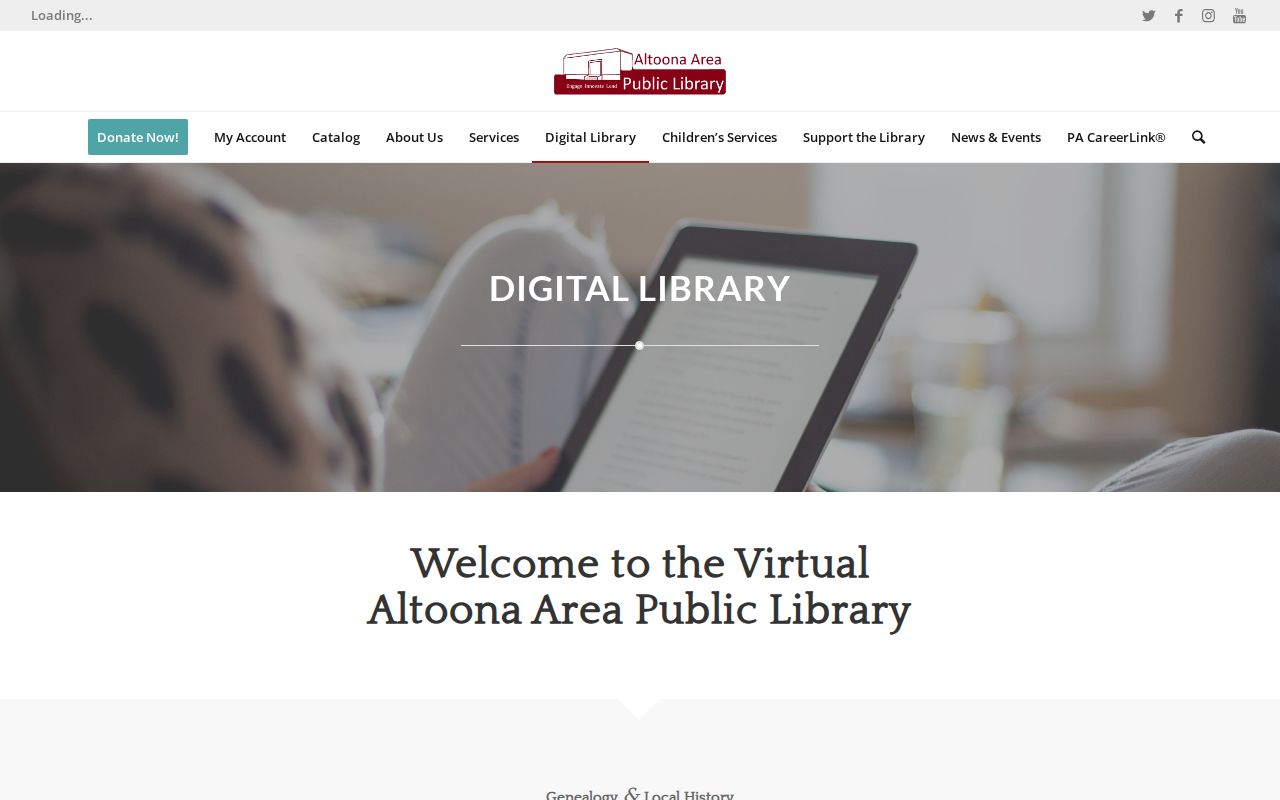
Library indexes can point to a newspaper notice or directory edition that should be checked against the original publication or a custodian record.
Rail History Shapes Altoona Addresses
Altoona was laid out in 1849 by the Pennsylvania Railroad as a shop and rail-line staging community. The original yard lay near today’s Station Mall between 9th and 10th Avenues, with early commercial growth on one side and residential development on the other. That history explains why an older directory or map may rely on numbered avenues, rail references, wards, or neighborhood names. Llyswen’s streetcar-era development and annexation-era areas such as Juniata also make the record date important when reading a locality label.
For a historic property trail, preserve the year, the printed locality name, the parcel or old map number, and the legal description. Those stable record clues are more reliable than forcing an old directory address into a modern ZIP or city-boundary assumption.
Note: Blair County was formed in 1848, so an earlier record series may be held through a parent-county or archival route rather than a modern county index.